
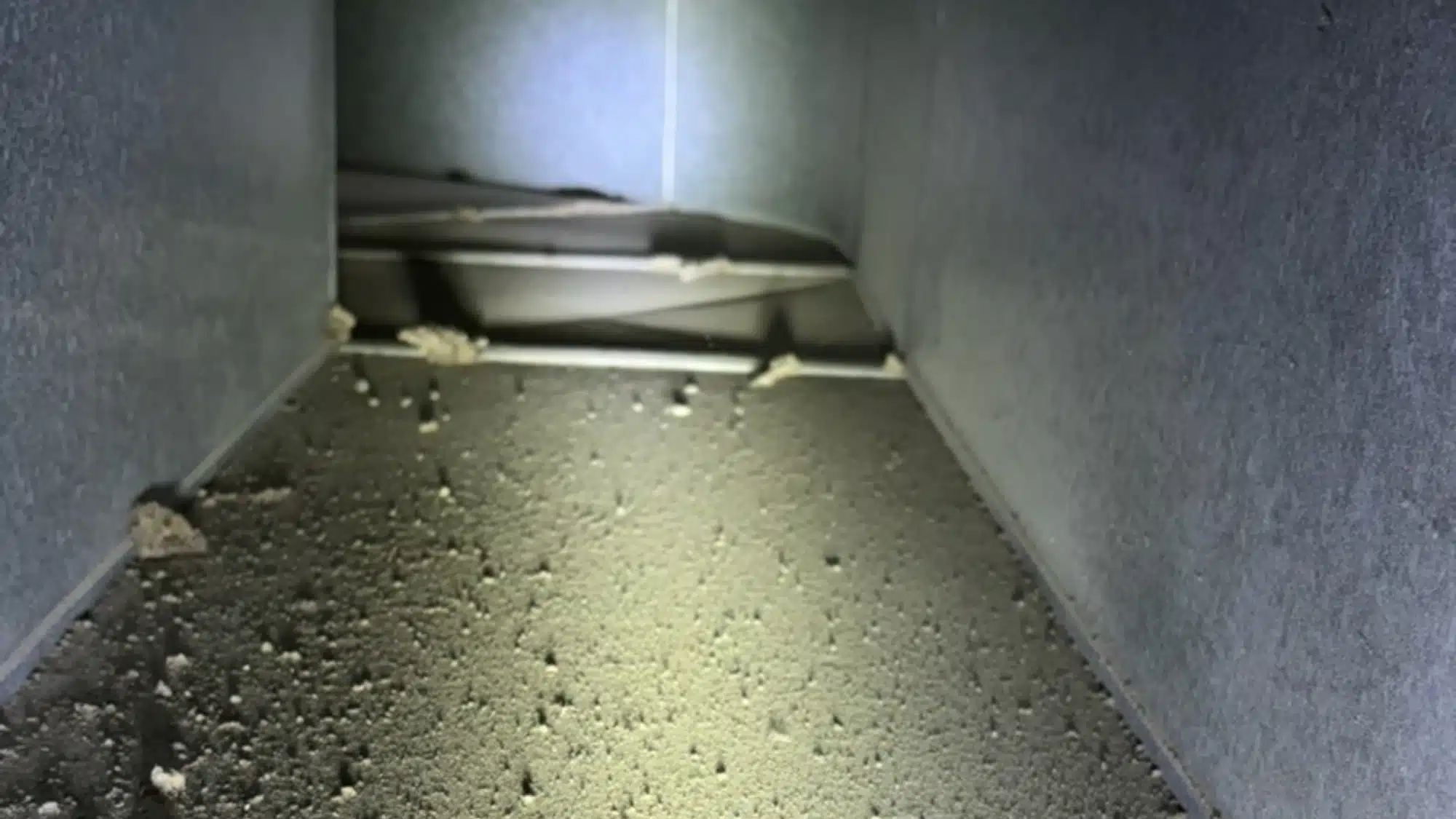
Proper air duct cleaning is not a quick pass with a shop vacuum at the registers. A professional project begins with inspection and a defined scope, then uses containment, negative pressure, mechanical agitation, extraction, and verification. The objective is to remove contaminants from the HVAC system while preventing debris from spreading into occupied areas.
Start with inspection and scope
The provider should identify the air handlers, supply and return systems, accessible components, duct materials, contamination level, and any special hazards. The scope should explain what will be cleaned and what is excluded. Photos or video from representative areas help establish the starting condition and reduce misunderstandings.
Place the system under controlled negative pressure
Professional collection equipment draws air from the duct system and passes it through suitable filtration or exhaust controls. Negative pressure helps carry loosened debris toward the collector and limits release into the building. Equipment selection depends on system size, access, building type, and project conditions.
Agitate surfaces and clean components
Air whips, brushes, compressed-air tools, and other devices may loosen attached material while the system is under suction. Tool selection must suit metal, flex duct, duct board, and lined surfaces to avoid damage. A complete scope may include accessible plenums, blower components, drain pans, and coils when contaminated and serviceable.
Protect the property and verify results
Registers and work areas should be protected, access openings should be properly closed, and equipment should be returned to operating condition. Verification can include visual inspection and before-and-after images. Homeowners should receive a clear explanation of findings, repairs, and any conditions that could cause contamination to return.
Know the dos and don’ts
Do hire a qualified company, ask about source removal, request a written scope, and confirm how fragile materials will be handled. Do not accept bait pricing, vague sanitizer claims, or work limited to vacuuming visible registers. Antimicrobial products should never replace physical cleaning or moisture correction and must be appropriate for the intended application.
A practical diagnostic approach
For properties in homes and businesses throughout Connecticut, the best next step is to document when the symptom occurs and how widely it appears. Note recent renovations, water events, filter changes, equipment replacement, unusual odors, and rooms with comfort complaints. A qualified technician can then inspect accessible components, compare conditions across supply and return sides, and use measurements where they add clarity. This evidence-first approach helps separate normal surface dust from a system condition that requires cleaning, repair, sealing, balancing, or replacement.
What homeowners should avoid
Avoid conclusions based on a single photograph, a dark mark at one register, or an unusually low promotional price. Do not place chemicals, fragrances, or household vacuum attachments inside the system without understanding the duct material and source of the problem. Aggressive tools can damage flex duct, fiberglass duct board, and internal liner. When moisture, combustion, electrical damage, pests, or suspected microbial growth is involved, address the underlying hazard and choose a scope suited to that condition.
What to request from a contractor
Ask for a written, system-specific scope that identifies the equipment and duct sections involved, the methods and controls to be used, property-protection steps, exclusions, expected duration, and how results will be documented. Confirm current insurance, relevant certifications, and experience with the duct materials in the building. Before-and-after images are useful when they show the same representative locations. A trustworthy provider should explain uncertainty, distinguish recommendations from requirements, and avoid promising health outcomes that cannot be guaranteed.
The Connecticut perspective
Connecticut homes include historic construction, additions completed in different eras, ducts routed through basements and attics, and systems exposed to humid summers and long heating seasons. Those variables influence leakage, condensation, filtration, and comfort. A solution that works in one property may be unnecessary or incomplete in another. Inspection should consider the whole air-distribution system, including the filter rack, air handler, supply ducts, returns, insulation, registers, and the building areas surrounding hidden ductwork.
When professional help is appropriate
Arrange a professional evaluation when the condition connected with duct cleaning service persists after basic filter and register checks, affects several rooms, produces visible particles, follows water or pest damage, or is accompanied by unusual equipment noise or odor. Prompt attention is especially important when there may be wet insulation, combustion products, electrical trouble, or a major airflow restriction. The purpose of the visit should be diagnosis first. Once the source and extent are understood, the provider can explain whether maintenance, component cleaning, full source-removal duct cleaning, sealing, balancing, repair, or replacement is justified. Homeowners should receive practical priorities instead of an all-or-nothing sales pitch, along with guidance for preventing the same condition from returning.
Frequently Asked Questions
How long does proper duct cleaning take?
It depends on system count, size, access, contamination, and required component work. Very short appointments may not allow a comprehensive process.
Should every home have ducts cleaned on a fixed schedule?
No. Inspection, occupancy, renovations, contamination events, and system condition should guide the decision.
Get an informed assessment from Duct Diagnostics
If you are seeing these warning signs or want to understand the condition of your HVAC system, contact Duct Diagnostics for a professional assessment. Since 1998, the company has served homes and businesses across Connecticut with NADCA-certified duct cleaning, before-and-after photography, transparent recommendations, and Aeroseal duct-sealing expertise. Call 203-734-1532 or request a free estimate at ductdiagnostics.com.