

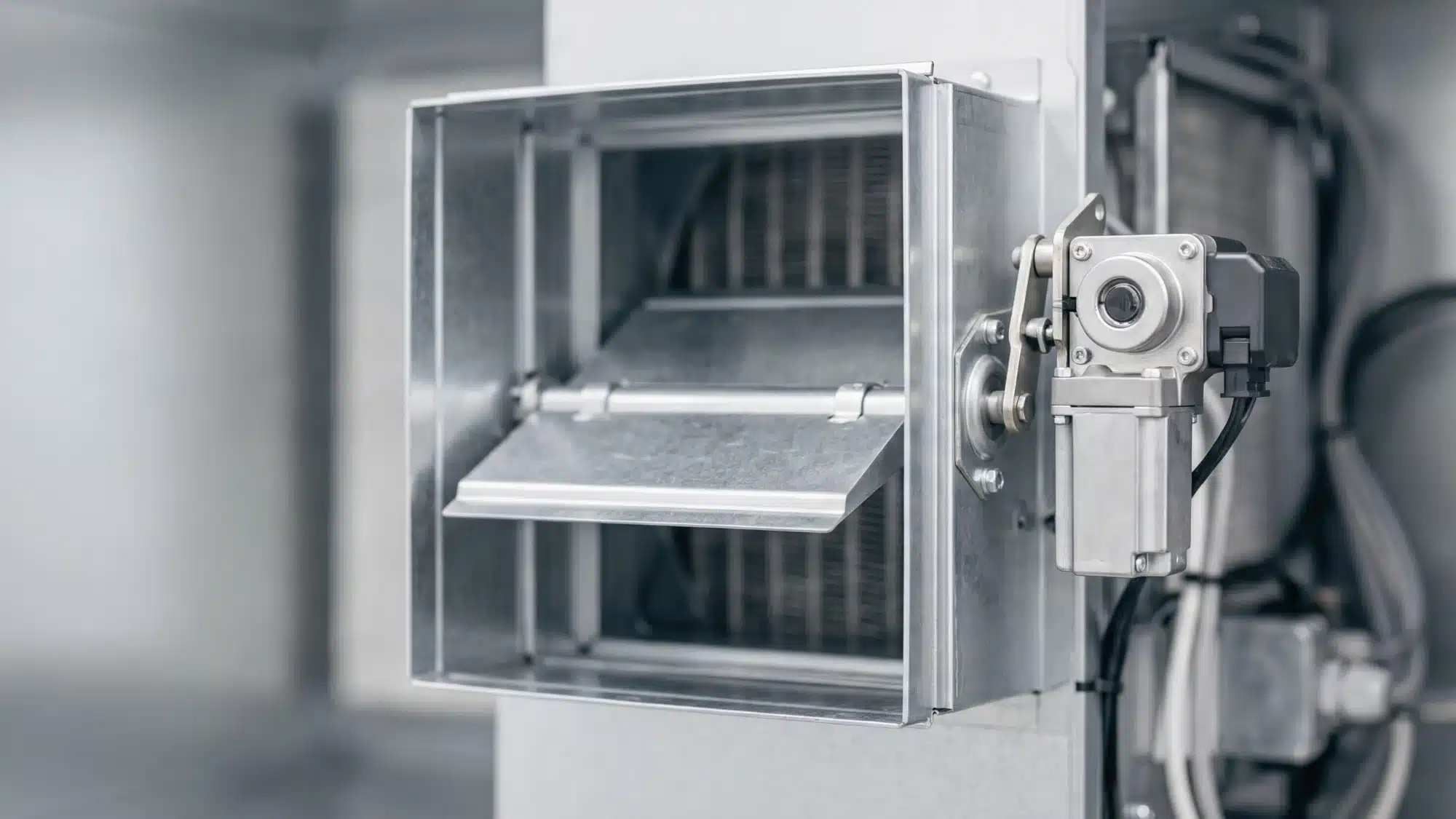
Electronic—or motorized—dampers are the airflow gates in a zoned HVAC system. Each zone has a thermostat or sensor. A control panel interprets calls for heating or cooling and commands dampers to open or close so conditioned air is directed where it is needed. Effective zoning depends on correct design; dampers alone cannot compensate for undersized ducts, poor returns, or equipment that cannot operate across the required airflow range.
The basic control sequence
When a zone calls, the panel starts or enables the HVAC equipment and opens the appropriate damper. Dampers serving satisfied zones may close or move to a minimum position. As calls change, the panel coordinates equipment staging and damper positions. Some dampers are power-open/power-close; others use a spring-return design.
Why static pressure must be managed
Closing zones reduces the duct area available for airflow. If the blower continues moving the same volume, static pressure can rise, producing noise, leakage, and equipment stress. Good systems use thoughtful duct sizing, variable-speed equipment, staged capacity, minimum damper positions, pressure controls, or other engineered strategies to keep operation within limits.
The role of bypass ducts
Some older zoning systems use a bypass duct that routes supply air back to the return. A poorly designed or oversized bypass can reduce efficiency and create temperature problems at the equipment. Modern design may avoid bypass by matching capacity and airflow more carefully. Existing bypass systems should be assessed rather than automatically removed or copied.
Common electronic-damper failures
Actuators can fail, linkages can slip, blades can bind, wiring can loosen, and zone panels or sensors can malfunction. A stuck-closed damper may cause a warm or cold room; a stuck-open damper may condition an unneeded area. Technicians should verify command signals and actual blade movement rather than replacing a thermostat based on symptoms alone.
Maintenance and diagnosis
Keep zone maps and damper labels near the panel, replace thermostat batteries when applicable, and note recurring fault lights. During service, confirm filter condition, total airflow, temperature rise or drop, static pressure in different zone combinations, and safe equipment operation. Zoning problems often involve the interaction of controls and ductwork.
A practical diagnostic approach
For properties in multi-level homes and commercial spaces across Fairfield County, CT, the best next step is to document when the symptom occurs and how widely it appears. Note recent renovations, water events, filter changes, equipment replacement, unusual odors, and rooms with comfort complaints. A qualified technician can then inspect accessible components, compare conditions across supply and return sides, and use measurements where they add clarity. This evidence-first approach helps separate normal surface dust from a system condition that requires cleaning, repair, sealing, balancing, or replacement.
What homeowners should avoid
Avoid conclusions based on a single photograph, a dark mark at one register, or an unusually low promotional price. Do not place chemicals, fragrances, or household vacuum attachments inside the system without understanding the duct material and source of the problem. Aggressive tools can damage flex duct, fiberglass duct board, and internal liner. When moisture, combustion, electrical damage, pests, or suspected microbial growth is involved, address the underlying hazard and choose a scope suited to that condition.
What to request from a contractor
Ask for a written, system-specific scope that identifies the equipment and duct sections involved, the methods and controls to be used, property-protection steps, exclusions, expected duration, and how results will be documented. Confirm current insurance, relevant certifications, and experience with the duct materials in the building. Before-and-after images are useful when they show the same representative locations. A trustworthy provider should explain uncertainty, distinguish recommendations from requirements, and avoid promising health outcomes that cannot be guaranteed.
The Connecticut perspective
Connecticut homes include historic construction, additions completed in different eras, ducts routed through basements and attics, and systems exposed to humid summers and long heating seasons. Those variables influence leakage, condensation, filtration, and comfort. A solution that works in one property may be unnecessary or incomplete in another. Inspection should consider the whole air-distribution system, including the filter rack, air handler, supply ducts, returns, insulation, registers, and the building areas surrounding hidden ductwork.
When professional help is appropriate
Arrange a professional evaluation when the condition connected with duct cleaning Fairfield, CT persists after basic filter and register checks, affects several rooms, produces visible particles, follows water or pest damage, or is accompanied by unusual equipment noise or odor. Prompt attention is especially important when there may be wet insulation, combustion products, electrical trouble, or a major airflow restriction. The purpose of the visit should be diagnosis first. Once the source and extent are understood, the provider can explain whether maintenance, component cleaning, full source-removal duct cleaning, sealing, balancing, repair, or replacement is justified. Homeowners should receive practical priorities instead of an all-or-nothing sales pitch, along with guidance for preventing the same condition from returning.
Frequently Asked Questions
Can electronic dampers be added to any system?
Not automatically. Equipment capacity, blower controls, duct sizes, returns, pressure, and zone loads must support the design.
Why is air still coming from a closed zone?
Many dampers allow some leakage or have a minimum-open setting. The actuator or blade may also be misaligned or stuck.
Get an informed assessment from Duct Diagnostics
If you are seeing these warning signs or want to understand the condition of your HVAC system, contact Duct Diagnostics for a professional assessment. Since 1998, the company has served homes and businesses across Connecticut with NADCA-certified duct cleaning, before-and-after photography, transparent recommendations, and Aeroseal duct-sealing expertise. Call 203-734-1532 or request a free estimate at ductdiagnostics.com.