

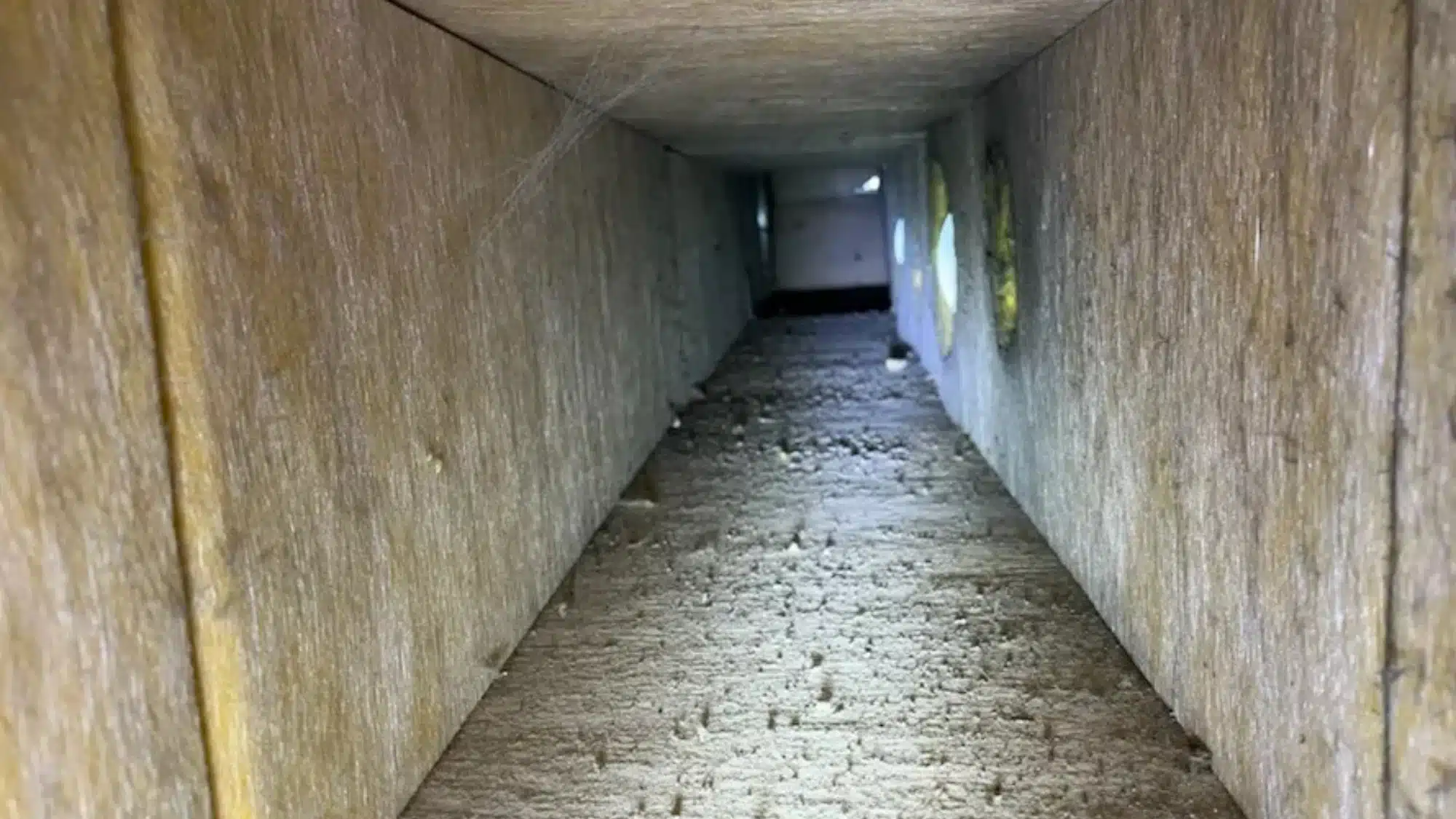
Not every duct is bare sheet metal. Fiberglass duct board can form the duct itself, and sheet-metal ducts may contain internal fibrous liner for insulation and sound control. These materials can perform well when dry, intact, and correctly installed. Problems arise when surfaces become wet, moldy, eroded, delaminated, or friable—meaning material can crumble or release fibers when disturbed.
Why these materials are used
Fibrous duct products reduce heat transfer, limit condensation when properly designed, and absorb equipment and airflow noise. Their exposed airstream surfaces are typically manufactured with a facing or coating. Age, abrasion, water, improper cleaning tools, and high air velocity can damage that surface and expose softer material below.
What friable means in practice
A friable surface is no longer reliably bound. It may shed when touched, brushed, or exposed to airflow. Black or gray particles at registers can sometimes be deteriorated liner, although soot, ordinary dirt, and other sources can look similar. The material should be inspected before anyone uses aggressive brushes that could worsen damage.
Moisture and microbial growth
Dust can settle on any duct surface, but sustained moisture creates the larger concern. Condensation, roof leaks, humidifier overflow, drain problems, and air leaks can wet porous material. When insulated ducts become wet or moldy, EPA guidance supports removal and replacement because effective cleaning is not feasible in the same way it may be for sound hard surfaces.
Cleaning requires material-specific methods
Tools suitable for galvanized metal may damage fiberglass surfaces. The contractor should identify the duct material, assess its integrity, select approved low-abrasion methods, and stop if the surface breaks down. Coatings are not a universal cure and should not hide unresolved moisture, widespread deterioration, or contamination that requires removal.
When replacement is the better choice
Replacement may be appropriate when liner is wet, moldy, extensively eroded, delaminated, contaminated by pests or sewage, or unable to withstand cleaning. Limited damage may allow a targeted repair. The decision should consider location, extent, accessibility, duct design, and the cost of restoring safe, durable airflow.
A practical diagnostic approach
For properties in residential and commercial properties across Connecticut, the best next step is to document when the symptom occurs and how widely it appears. Note recent renovations, water events, filter changes, equipment replacement, unusual odors, and rooms with comfort complaints. A qualified technician can then inspect accessible components, compare conditions across supply and return sides, and use measurements where they add clarity. This evidence-first approach helps separate normal surface dust from a system condition that requires cleaning, repair, sealing, balancing, or replacement.
What homeowners should avoid
Avoid conclusions based on a single photograph, a dark mark at one register, or an unusually low promotional price. Do not place chemicals, fragrances, or household vacuum attachments inside the system without understanding the duct material and source of the problem. Aggressive tools can damage flex duct, fiberglass duct board, and internal liner. When moisture, combustion, electrical damage, pests, or suspected microbial growth is involved, address the underlying hazard and choose a scope suited to that condition.
What to request from a contractor
Ask for a written, system-specific scope that identifies the equipment and duct sections involved, the methods and controls to be used, property-protection steps, exclusions, expected duration, and how results will be documented. Confirm current insurance, relevant certifications, and experience with the duct materials in the building. Before-and-after images are useful when they show the same representative locations. A trustworthy provider should explain uncertainty, distinguish recommendations from requirements, and avoid promising health outcomes that cannot be guaranteed.
The Connecticut perspective
Connecticut homes include historic construction, additions completed in different eras, ducts routed through basements and attics, and systems exposed to humid summers and long heating seasons. Those variables influence leakage, condensation, filtration, and comfort. A solution that works in one property may be unnecessary or incomplete in another. Inspection should consider the whole air-distribution system, including the filter rack, air handler, supply ducts, returns, insulation, registers, and the building areas surrounding hidden ductwork.
When professional help is appropriate
Arrange a professional evaluation when the condition connected with duct cleaning bridgeport ct persists after basic filter and register checks, affects several rooms, produces visible particles, follows water or pest damage, or is accompanied by unusual equipment noise or odor. Prompt attention is especially important when there may be wet insulation, combustion products, electrical trouble, or a major airflow restriction. The purpose of the visit should be diagnosis first. Once the source and extent are understood, the provider can explain whether maintenance, component cleaning, full source-removal duct cleaning, sealing, balancing, repair, or replacement is justified. Homeowners should receive practical priorities instead of an all-or-nothing sales pitch, along with guidance for preventing the same condition from returning.
Frequently Asked Questions
Is all fiberglass ductwork unsafe?
No. Intact, dry products installed and maintained correctly can serve their intended purpose. Condition—not the material name alone—drives the recommendation.
Can damaged liner be identified from vent dust alone?
Usually not. Inspection inside the duct and air handler is needed to distinguish liner deterioration from soot, dirt, or other particles.
Get an informed assessment from Duct Diagnostics
If you are seeing these warning signs or want to understand the condition of your HVAC system, contact Duct Diagnostics for a professional assessment. Since 1998, the company has served homes and businesses across Connecticut with NADCA-certified duct cleaning, before-and-after photography, transparent recommendations, and Aeroseal duct-sealing expertise. Call 203-734-1532 or request a free estimate at ductdiagnostics.com.