
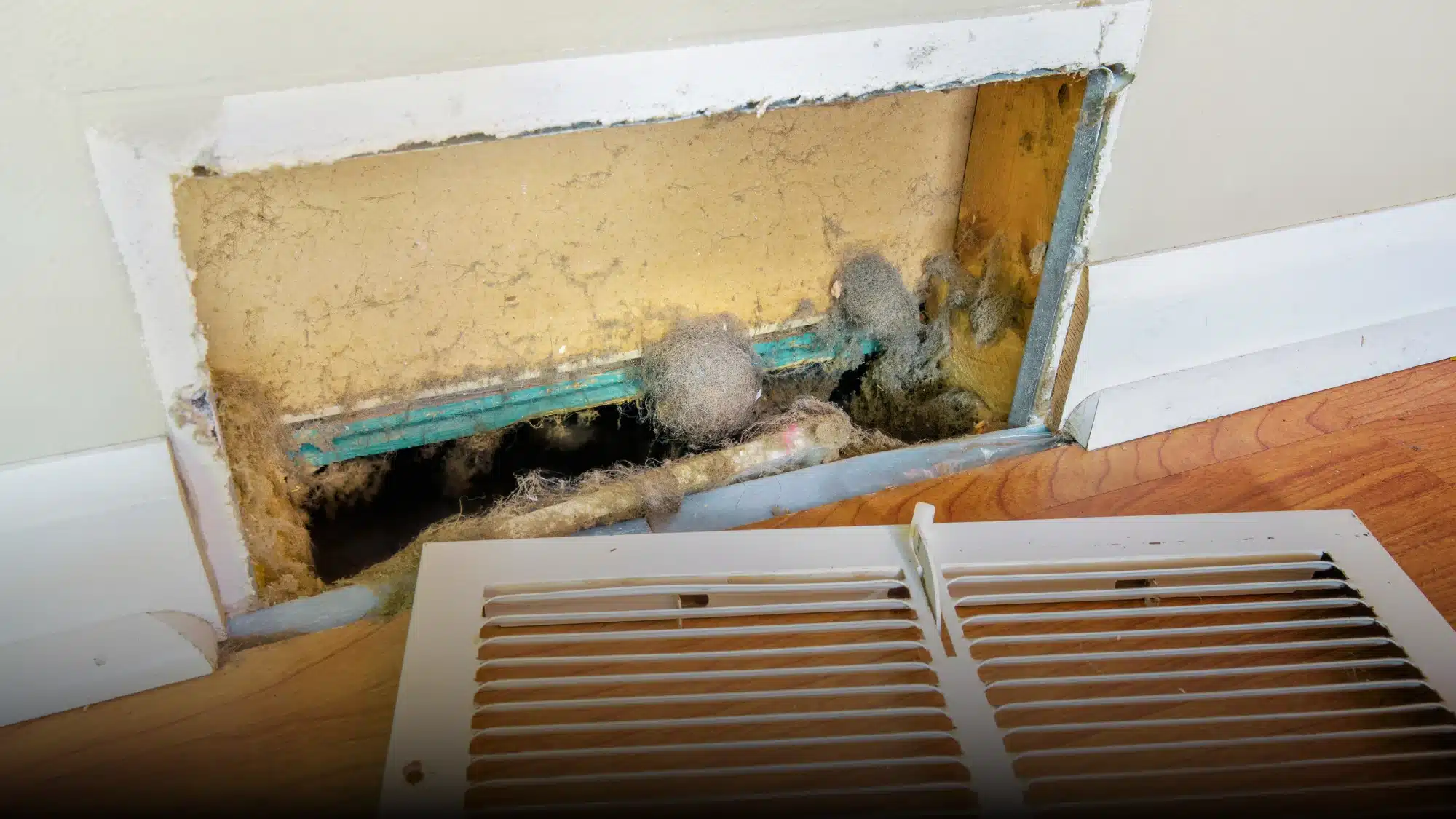
Black particles around a supply register are unsettling, but color alone does not identify the source. The material may be ordinary dust darkened by moisture or oils, soot from candles or combustion, degraded foam or fiberglass inside the HVAC system, rubber debris from a belt, pest material, or suspected microbial growth. A careful inspection is more useful than guessing—or immediately spraying chemicals into the ducts.
Start with where the particles appear
Note whether the material is at one register or throughout the building, whether it appears only when the fan starts, and whether nearby surfaces show candle soot or combustion residue. A single outlet may point to a local branch or register gasket. Multiple outlets suggest a source closer to the air handler or main supply trunk.
Inspect internal insulation and components
Deteriorating internal duct liner, duct-board facing, cabinet insulation, acoustic foam, or gaskets can release dark fragments. Older belt-driven equipment may shed rubber. A technician should inspect the blower compartment, coils, plenums, branch ducts, and accessible liner without using tools that could create additional damage.
Consider soot and pressure effects
Candles, fireplaces, smoking, cooking, and poorly vented combustion appliances can produce fine dark material. Pressure imbalances may pull pollutants from garages, mechanical rooms, fireplaces, attics, or wall cavities. Combustion-safety concerns deserve prompt professional attention, especially when odors, alarms, headaches, or visible backdrafting are present.
Do not assume every dark spot is mold
Some microbial growth is dark, but visual appearance is not definitive. Moisture history, surface condition, odor, and appropriate testing may be needed. If porous insulation is wet or moldy, replacement may be recommended. Any water source must be fixed or the condition can return after cleaning.
Document and correct the source
Photograph the particles, save a sample without disturbing a large area, and arrange an HVAC inspection. The remedy may involve component cleaning, duct cleaning, liner replacement, sealing, pressure correction, filter-rack repair, or combustion service. Cleaning visible registers alone will not solve a continuing upstream source.
A practical diagnostic approach
For properties in homes and businesses throughout Connecticut, the best next step is to document when the symptom occurs and how widely it appears. Note recent renovations, water events, filter changes, equipment replacement, unusual odors, and rooms with comfort complaints. A qualified technician can then inspect accessible components, compare conditions across supply and return sides, and use measurements where they add clarity. This evidence-first approach helps separate normal surface dust from a system condition that requires cleaning, repair, sealing, balancing, or replacement.
What homeowners should avoid
Avoid conclusions based on a single photograph, a dark mark at one register, or an unusually low promotional price. Do not place chemicals, fragrances, or household vacuum attachments inside the system without understanding the duct material and source of the problem. Aggressive tools can damage flex duct, fiberglass duct board, and internal liner. When moisture, combustion, electrical damage, pests, or suspected microbial growth is involved, address the underlying hazard and choose a scope suited to that condition.
What to request from a contractor
Ask for a written, system-specific scope that identifies the equipment and duct sections involved, the methods and controls to be used, property-protection steps, exclusions, expected duration, and how results will be documented. Confirm current insurance, relevant certifications, and experience with the duct materials in the building. Before-and-after images are useful when they show the same representative locations. A trustworthy provider should explain uncertainty, distinguish recommendations from requirements, and avoid promising health outcomes that cannot be guaranteed.
The Connecticut perspective
Connecticut homes include historic construction, additions completed in different eras, ducts routed through basements and attics, and systems exposed to humid summers and long heating seasons. Those variables influence leakage, condensation, filtration, and comfort. A solution that works in one property may be unnecessary or incomplete in another. Inspection should consider the whole air-distribution system, including the filter rack, air handler, supply ducts, returns, insulation, registers, and the building areas surrounding hidden ductwork.
When professional help is appropriate
Arrange a professional evaluation when the condition connected with duct cleaning company persists after basic filter and register checks, affects several rooms, produces visible particles, follows water or pest damage, or is accompanied by unusual equipment noise or odor. Prompt attention is especially important when there may be wet insulation, combustion products, electrical trouble, or a major airflow restriction. The purpose of the visit should be diagnosis first. Once the source and extent are understood, the provider can explain whether maintenance, component cleaning, full source-removal duct cleaning, sealing, balancing, repair, or replacement is justified. Homeowners should receive practical priorities instead of an all-or-nothing sales pitch, along with guidance for preventing the same condition from returning.
Frequently Asked Questions
Are black particles from vents always dangerous?
No, but they should not be ignored. The health and equipment implications depend on what the material is and why it is being released.
Should I turn off the HVAC system?
If there is heavy discharge, a burning odor, smoke, a carbon-monoxide alarm, or suspected combustion problem, stop operation when safe and seek urgent qualified help.
Get an informed assessment from Duct Diagnostics
If you are seeing these warning signs or want to understand the condition of your HVAC system, contact Duct Diagnostics for a professional assessment. Since 1998, the company has served homes and businesses across Connecticut with NADCA-certified duct cleaning, before-and-after photography, transparent recommendations, and Aeroseal duct-sealing expertise. Call 203-734-1532 or request a free estimate at ductdiagnostics.com.